Reptile Temperature & Humidity Guide
Basking spot, cool side, night low and humidity for 30 popular reptiles, in °F or °C.
| Species | Basking | Cool side | Night low | Humidity | UVB |
|---|---|---|---|---|---|
| Ball python | 88–92 °F | 75–80 °F | 70+ °F | 55–75% | Helpful |
| Corn snake | 85–90 °F | 72–78 °F | 65+ °F | 40–60% | Helpful |
| California kingsnake | 85–90 °F | 72–78 °F | 65+ °F | 40–60% | Helpful |
| Milk snake | 85–90 °F | 72–78 °F | 65+ °F | 40–60% | Helpful |
| Western hognose | 90–95 °F | 72–80 °F | 65+ °F | 30–50% | Helpful |
| Boa constrictor | 88–95 °F | 75–80 °F | 72+ °F | 55–75% | Helpful |
| Carpet python | 90–95 °F | 75–80 °F | 70+ °F | 50–70% | Helpful |
| Rosy boa | 85–95 °F | 70–80 °F | 65+ °F | 20–40% | Helpful |
| Kenyan sand boa | 90–95 °F | 75–80 °F | 70+ °F | 20–40% | Helpful |
| Brazilian rainbow boa | 85–90 °F | 75–80 °F | 72+ °F | 75–90% | Helpful |
| Green tree pythonMist to 80–90% at night | 86–90 °F | 78–82 °F | 72+ °F | 50–70% | Helpful |
| Garter snake | 85–90 °F | 70–75 °F | 60+ °F | 40–60% | Recommended |
| Leopard geckoPlus a humid hide for shedding | 94–97 °F | 70–77 °F | 60+ °F | 30–40% | Recommended |
| Crested geckoNo hot basking spot: never above 85 °F | 78–82 °F | 70–75 °F | 65+ °F | 50–80% | Recommended |
| African fat-tailed gecko | 90–95 °F | 75–80 °F | 70+ °F | 50–70% | Recommended |
| Tokay gecko | 90–95 °F | 75–80 °F | 70+ °F | 60–80% | Recommended |
| Bearded dragon | 100–110 °F | 75–85 °F | 65+ °F | 30–40% | Essential |
| Blue-tongued skinkNorthern type; Indonesian types need 60–80% | 100–105 °F | 75–80 °F | 65+ °F | 40–60% | Essential |
| Veiled chameleonMist so it spikes higher; needs a night drop | 85–95 °F | 72–80 °F | 60+ °F | 40–60% | Essential |
| Panther chameleonHigher at night; needs a night drop | 85–90 °F | 72–80 °F | 60+ °F | 50–70% | Essential |
| Uromastyx | 115–130 °F | 80–85 °F | 70+ °F | 10–30% | Essential |
| Green iguana | 95–100 °F | 78–82 °F | 72+ °F | 70–80% | Essential |
| Argentine tegu | 115–125 °F | 75–80 °F | 70+ °F | 60–80% | Essential |
| Ackie monitorHumid, deep substrate for burrows | 140–160 °F | 75–80 °F | 70+ °F | 50–70% | Essential |
| Chinese water dragon | 95–100 °F | 75–80 °F | 70+ °F | 60–80% | Essential |
| Green anole | 85–90 °F | 75–80 °F | 65+ °F | 60–80% | Essential |
| Russian tortoise | 95–100 °F | 70–75 °F | 60+ °F | 40–60% | Essential |
| Sulcata tortoiseHatchlings 60–80% | 95–105 °F | 75–85 °F | 70+ °F | 40–60% | Essential |
| Eastern box turtle | 85–90 °F | 70–75 °F | 65+ °F | 60–80% | Essential |
| Red-eared sliderCool side = water temperature | 90–95 °F | 75–80 °F | 65+ °F | Aquatic | Essential |
Showing 30 of 30 species. Typical ranges from current care guides; check your species' care sheet and watch where your animal chooses to sit.
How to read the chart
- Basking: the surface temperature right under the heat lamp, where your reptile lies. Measure it with an infrared temperature gun, not a stick-on dial.
- Cool side: the air at the far end of the enclosure. The difference between the two is the gradient that lets your animal regulate its own temperature.
- Night low: the lowest the enclosure should go at night. Most species are fine with a gentle drop; chameleons need one.
- Humidity: the air humidity, measured with a digital hygrometer halfway up the enclosure.
Get the numbers right in practice
Always run heat through a thermostat, and check readings at the same time each day. A heat lamp that is fine in summer can run too hot or too cold in winter. Readings drifting out of range are one of the most common reasons a snake stops eating or a gecko sheds badly.
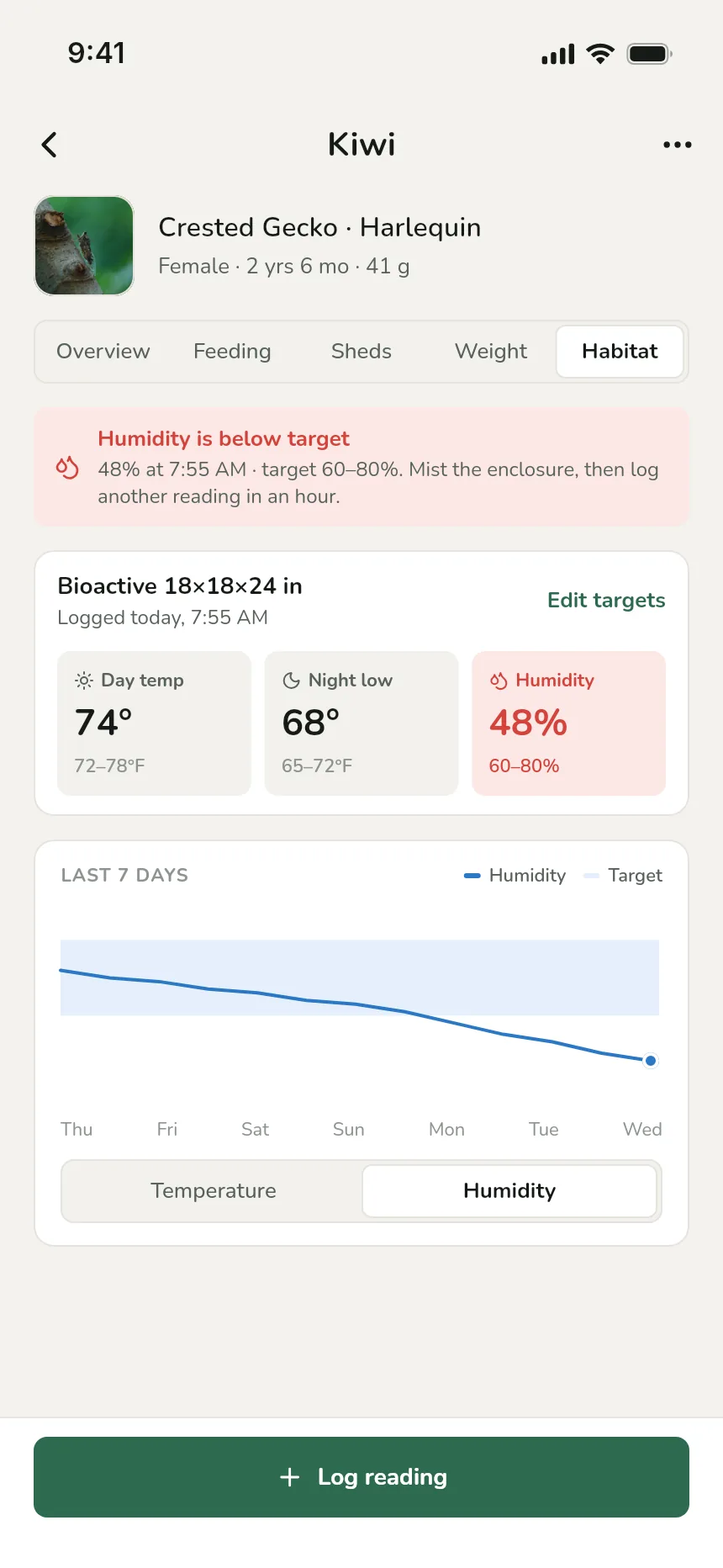
The Reptile Keeper app lets you log warm-side, cool-side and humidity readings and shows when one is out of range. Setting up a new enclosure? Check the size first with our enclosure size calculator.
Log it in two taps
Reptile Keeper reminds you who is due today and tracks every feeding.
FAQ
Questions people ask
Short answers about this free tool.
What temperature should a ball python tank be?
A basking surface of 88–92 °F (31–33 °C), a cool side of 75–80 °F (24–27 °C), no lower than about 70 °F (21 °C) at night, and humidity around 55–75%.
How hot should a bearded dragon basking spot be?
For adults, a basking surface of 100–110 °F (38–43 °C), with the cool side at 75–85 °F (24–29 °C). Babies like the top of the range. Strong UVB is essential.
Do snakes need UVB?
Snakes can live without it, but low-level UVB is now widely recommended as helpful. For bearded dragons, chameleons, tortoises and most daytime lizards it is essential.
How do I raise humidity in a reptile enclosure?
Use a moisture-holding substrate, a larger water bowl, a humid hide and misting, and cover part of a screen top. To lower it, improve ventilation and use a drier substrate.