Ball Python Feeding Chart by Age and Weight
How big the prey should be, how often to feed, and when to move up a size, from hatchling to adult, with a feeding chart by weight and how to feed frozen-thawed safely.

The Reptile Keeper team
Nov 24, 2026 · 3 min read
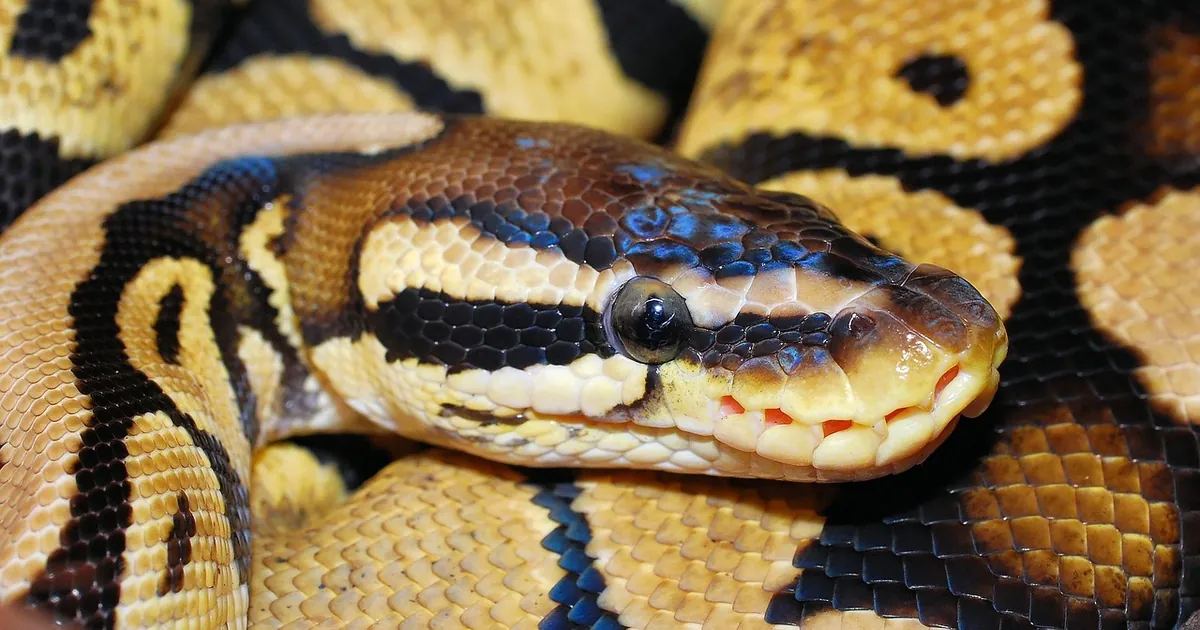
Prey size and feeding interval both depend on how much your python weighs, not how old it is. Two snakes of the same age can differ by hundreds of grams. Use the chart below as a starting point, then adjust to the snake in front of you.
The rule
Feed one prey item weighing about 10–15% of the snake's body weight, and make the gap between meals longer as the snake grows.
The other check is width: the prey's widest part should be no wider than the widest part of the snake's body, which leaves a slight bulge after the meal.
Ball python feeding chart
| Snake weight | Prey weight | Prey item | Feed every |
|---|---|---|---|
| 50–100 g (hatchling) | 5–15 g | Hopper mouse or rat pinky/fuzzy | 5–7 days |
| 100–300 g (juvenile) | 10–45 g | Adult mouse or rat pup | 7 days |
| 300–1,000 g (sub-adult) | 30–150 g | Weaned to small rat | 7–10 days |
| Over 1,000 g (adult) | 100–300 g | Medium to large rat | 10–14 days |
Prey names and weights differ between suppliers, so check the weight on the bag. Our free feeding schedule calculator does the sum for your snake's exact weight and gives the next feeding date.
How to weigh your snake
Put a plastic tub with a lid on a kitchen scale, zero it, then pop the snake in. Weigh before a meal, not after, and write it down. Weigh every two weeks for young snakes and monthly for adults. Weight is how you know whether the schedule is working.
Moving up a size
Move up when the current prey leaves no visible bump, or when the snake has gained weight steadily for a month or two. Move up one size at a time. If the snake struggles to swallow or regurgitates, go back down.
Reading body condition
A healthy ball python is a rounded loaf shape, slightly flattened on the bottom.
- Spine or ribs showing, a triangular cross-section: underweight. Feed a little more often.
- Fat rolls when it bends, skin stretched between scales, a soft "squishy" body: overweight. Stretch the gap between meals, especially in adults.
Avoid "power feeding" (large meals very often to grow a snake fast): it causes obesity and shortens a ball python's life.
Frozen-thawed, the safe way
Frozen-thawed prey is safer than live: a live rat can bite and seriously injure a snake that isn't hungry.
- Thaw in the fridge overnight, or in a sealed bag in cool water for a few hours.
- Warm the sealed prey in warm (not boiling) water for 10–20 minutes, until the surface feels warm to your touch. Never use a microwave: it cooks the inside and can burst.
- Offer with long tongs, in the evening, wiggling it slightly. Many ball pythons strike best at dusk with the room lights low.
- If the snake hasn't taken it after 15–20 minutes, remove it and wait about a week. Don't refreeze thawed prey.
Feeding in the enclosure or a tub?
Either works. Feeding in the enclosure is less stressful for most ball pythons, and it doesn't make them more likely to bite. If your substrate is loose, put the prey on a flat dish or a tile so the snake doesn't swallow substrate.
After the meal
Don't handle the snake for at least 48 hours after eating. Handling a snake with a full stomach can make it regurgitate, which is hard on its body.
When your python refuses
Ball pythons often skip meals in winter, before a shed or after a move. A refusal is no worry while the weight holds; a loss of more than 10% is worth a vet visit. Our guide to why a ball python stops eating walks through the nine usual reasons.
The Reptile Keeper app logs each meal with the prey type and weight, reminds you on feeding day, and moves the next offer automatically after a refusal, so your schedule keeps itself.
Frequently asked questions
What size rat should I feed my ball python?
One that weighs about 10–15% of your snake's weight, and is no wider than the widest part of the snake's body. A 1,000 g adult takes a rat of about 100–150 g.
How often should I feed an adult ball python?
Every 10 to 14 days for most adults. Large females and older snakes can go longer between meals.
Mice or rats for a ball python?
Rats are the better long-term staple: they are more nutritious per meal and one rat replaces several mice as the snake grows. Many hatchlings start on mice and switch.
Can I feed my ball python two small prey instead of one big one?
Yes, as long as the total stays around 10–15% of the snake's weight, but one right-sized item is usually better.